The kitchen has long been considered the heart of the home, but in 2026 its role continues to evolve. Kitchen Trends in 2026 show its no longer simply a place for preparing meals, today’s kitchen is where we gather, entertain, work, relax and connect. The latest kitchen trends reflect this shift, moving away from spaces that feel overly polished or purely functional and towards kitchens with warmth, texture, personality and a stronger connection to the rest of the home.
For New Zealand homeowners, this is particularly relevant. Our kitchens often sit at the centre of open-plan living, connecting indoor spaces with gardens, outdoor entertaining areas and the wider landscape. In 2026, the most successful kitchen designs are not necessarily the ones following every trend, but those that combine beautiful materials and thoughtful design with the way we actually live.
Warmth Replaces the All-White Kitchen
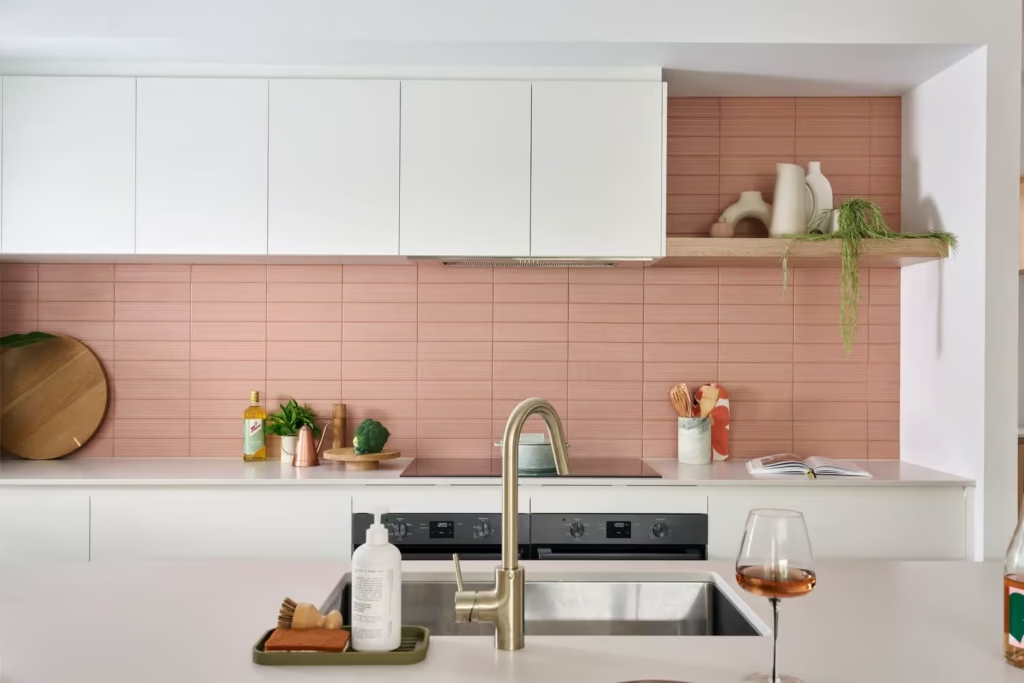
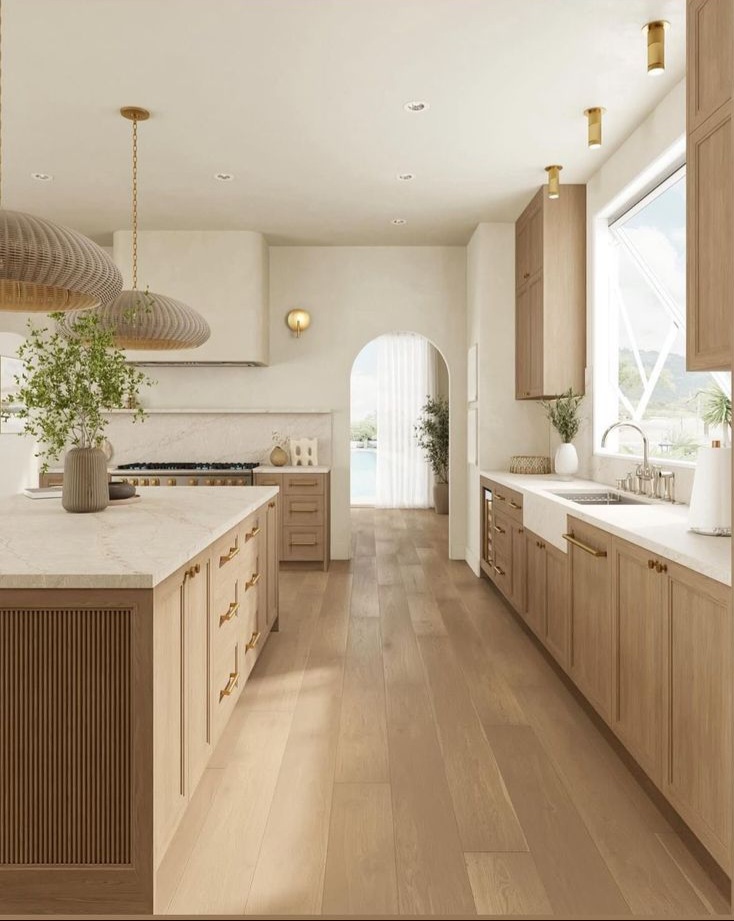
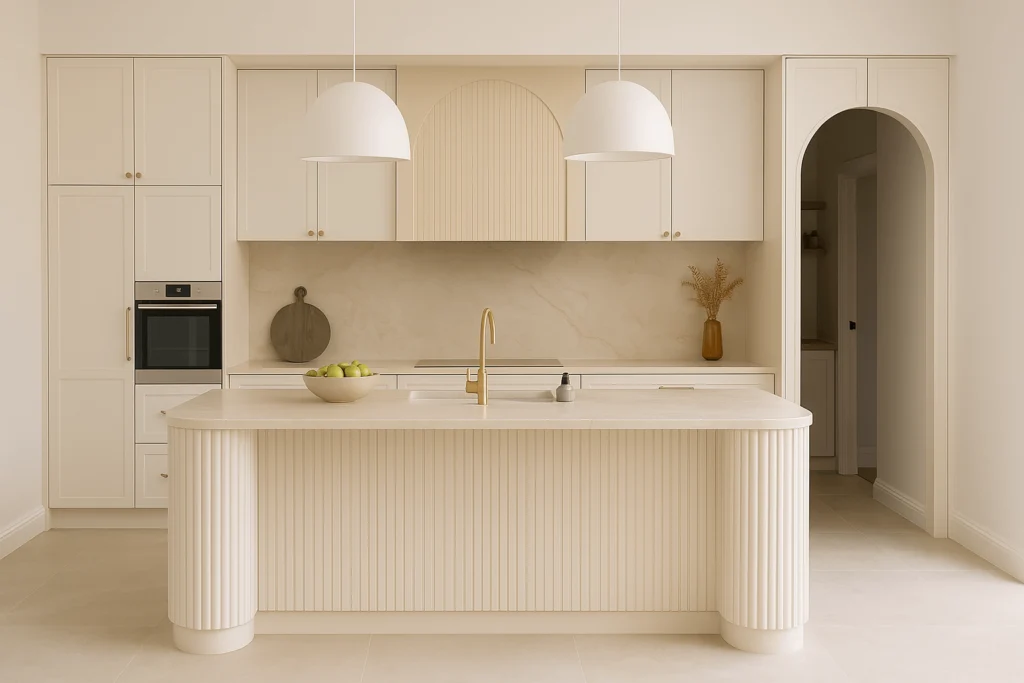
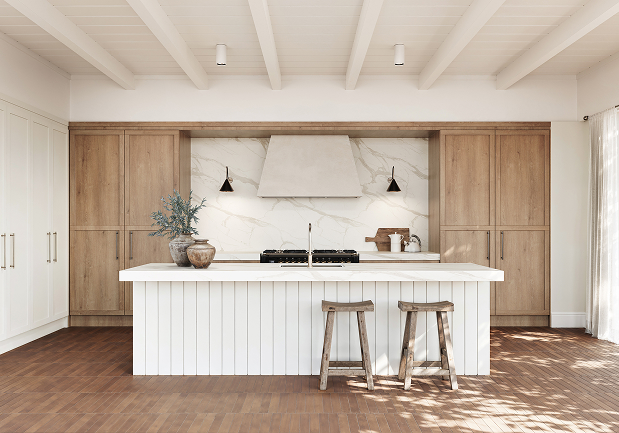
The all-white kitchen isn’t disappearing completely, but its reign as the default choice is coming to an end. In its place is a much warmer approach, with creamy whites, sandy neutrals, taupe, warm timber, muted greens, soft browns and earthy tones bringing greater depth and character to the kitchen.
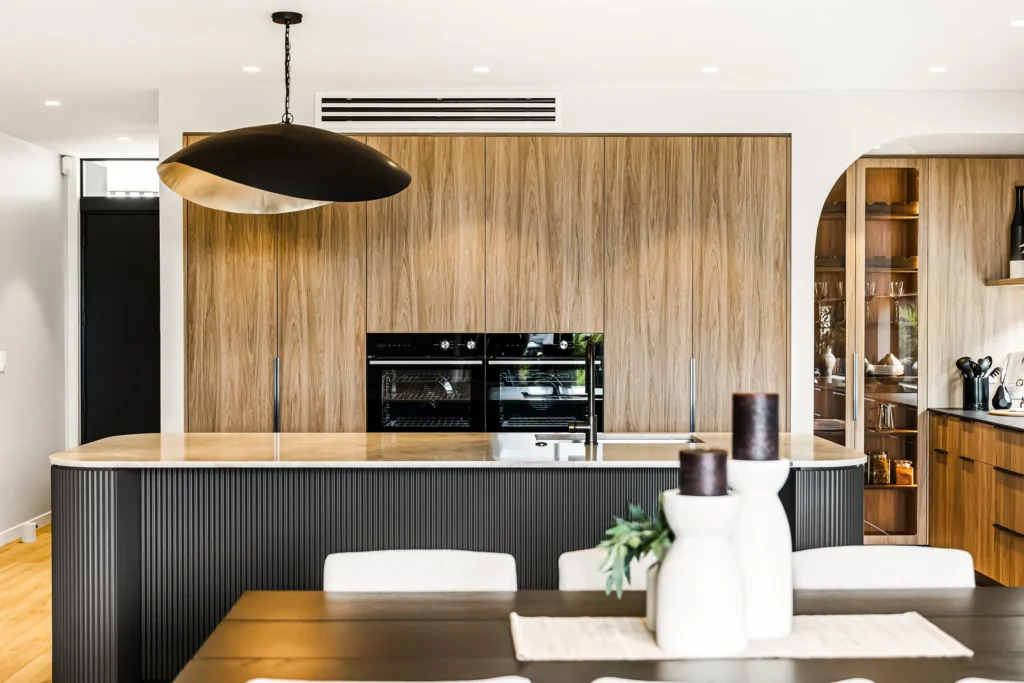
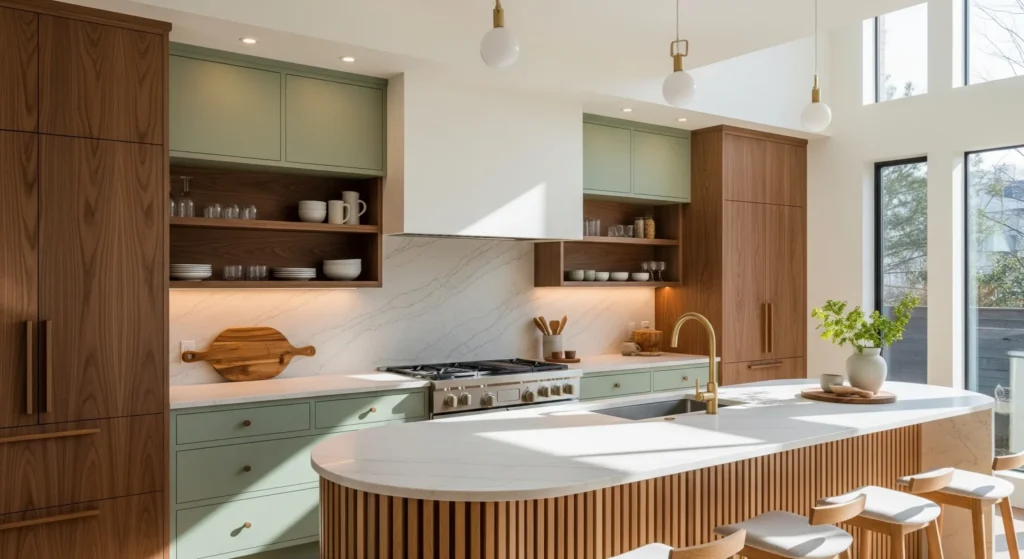
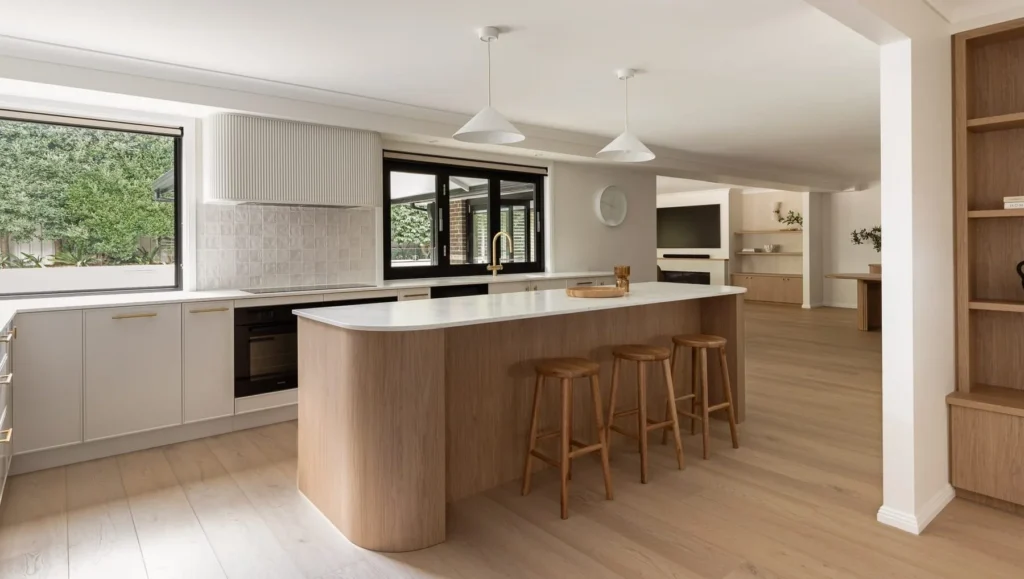
This move towards warmer colour is part of a broader shift towards what is being described as ‘soft’ or ‘warm minimalism’. Clean lines remain, but they are balanced with natural materials and tactile finishes rather than stark white cabinetry and highly polished surfaces. For a timeless New Zealand kitchen, consider introducing colour through cabinetry, a stone splashback or island rather than committing to an entire room in a strong shade. Natural timber paired with warm off-white cabinetry is particularly effective, creating a relaxed palette that works beautifully with stone, concrete and other natural finishes.
Natural Materials Take Centre Stage
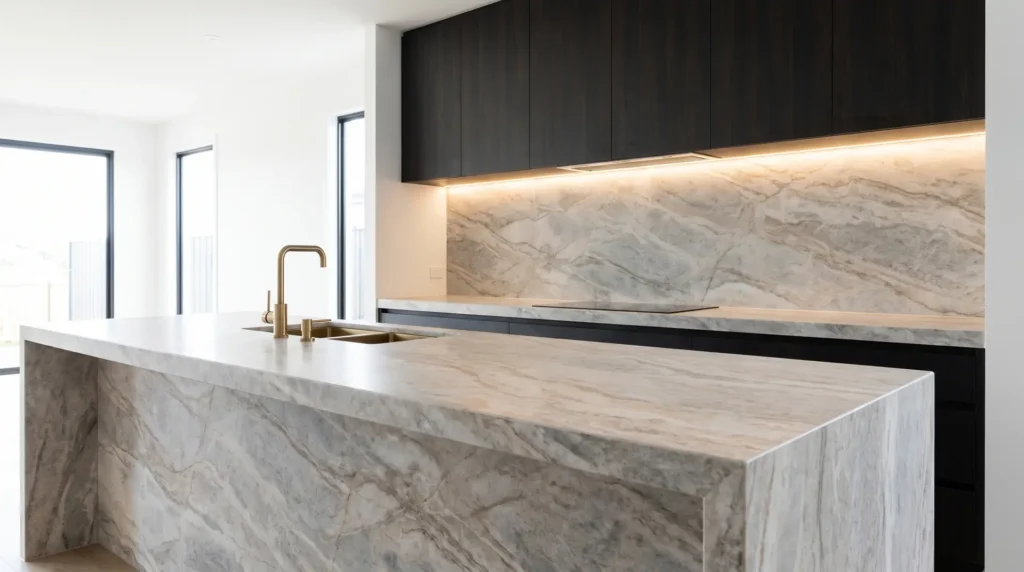
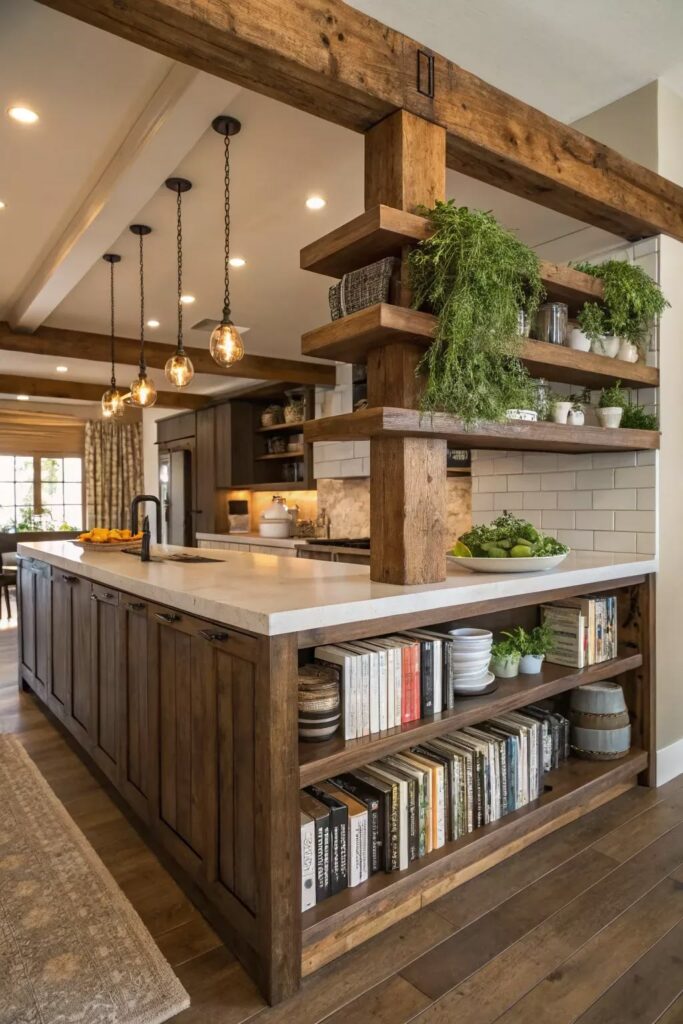
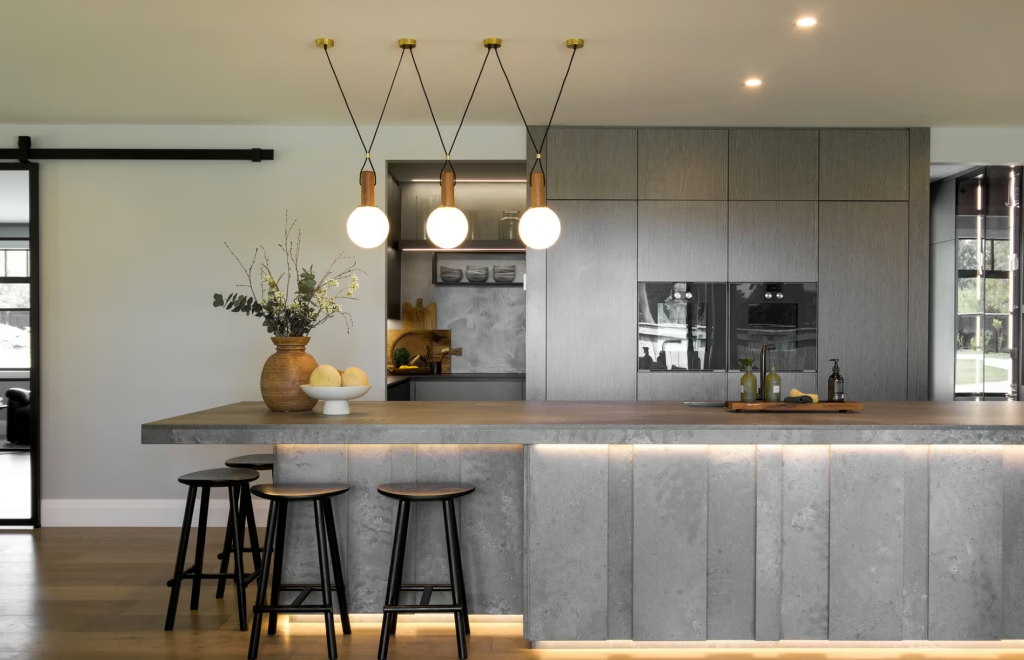
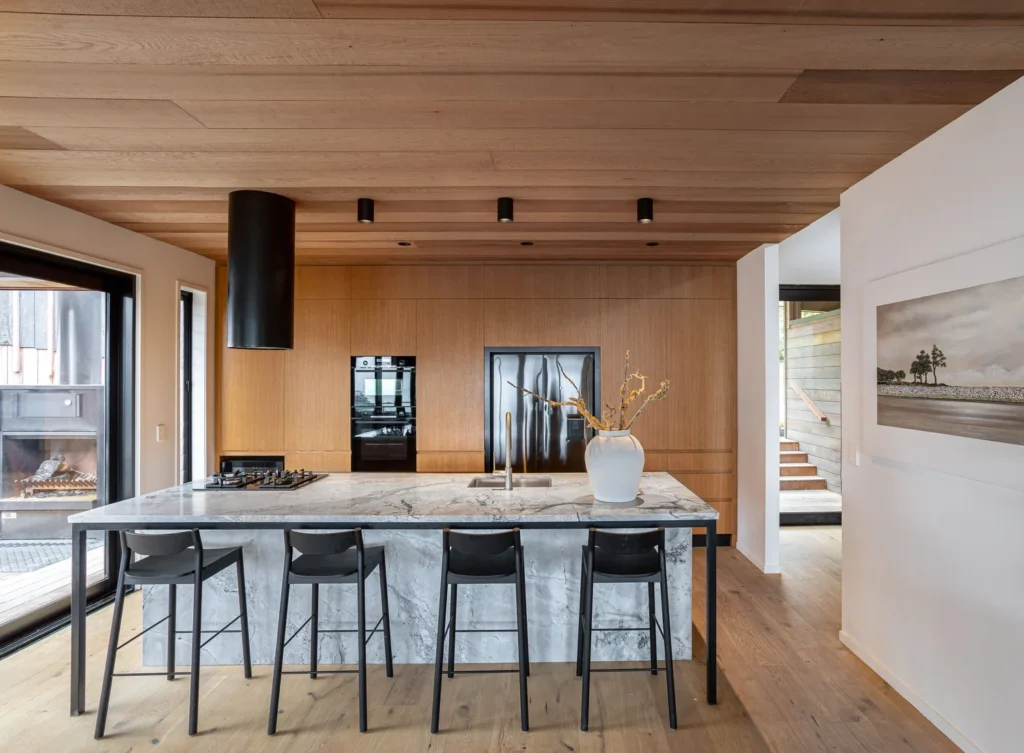
Perhaps the biggest design story for Kitchen Trends in 2026 is the desire for materials that look and feel natural. Timber, stone, brick, microcement and textured surfaces are being used to bring a sense of authenticity to contemporary kitchens, while natural variations in grain, veining and texture are being celebrated rather than concealed.
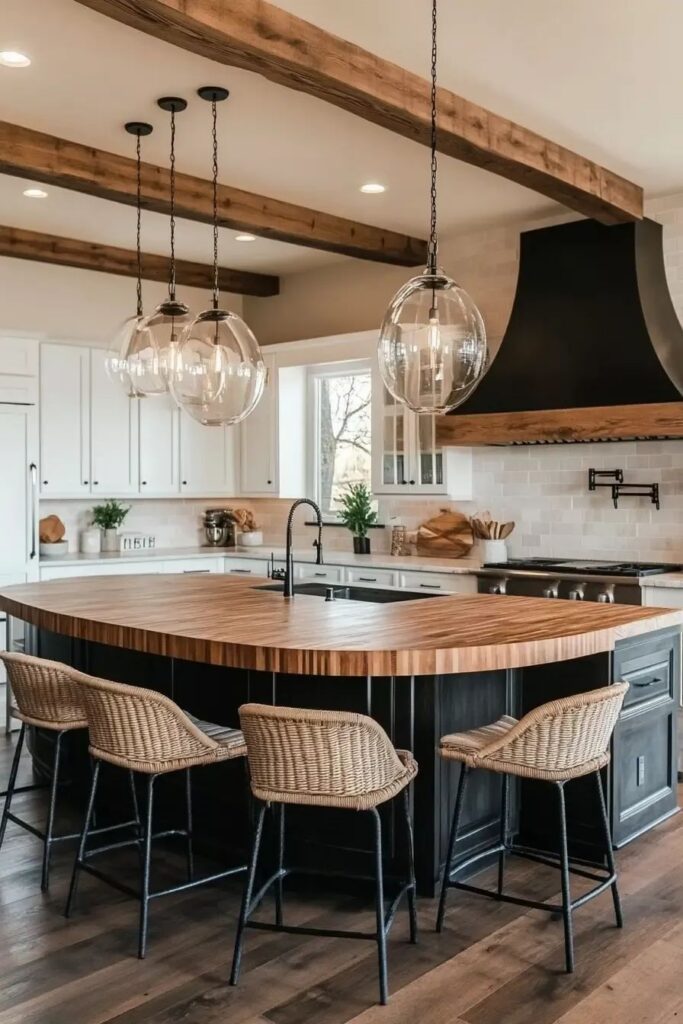
This means kitchens are becoming less about perfectly uniform finishes and more about creating layers of material. A timber island might sit alongside stone cabinetry, a handmade tile splashback or a softly textured wall finish. The result feels considered without becoming overly formal. For homeowners, this is also an opportunity to choose materials that will age gracefully. Rather than selecting a finish simply because it is fashionable in 2026, think about whether you will still appreciate its character in five or ten years.
Kitchens That Don’t Look Like Kitchens
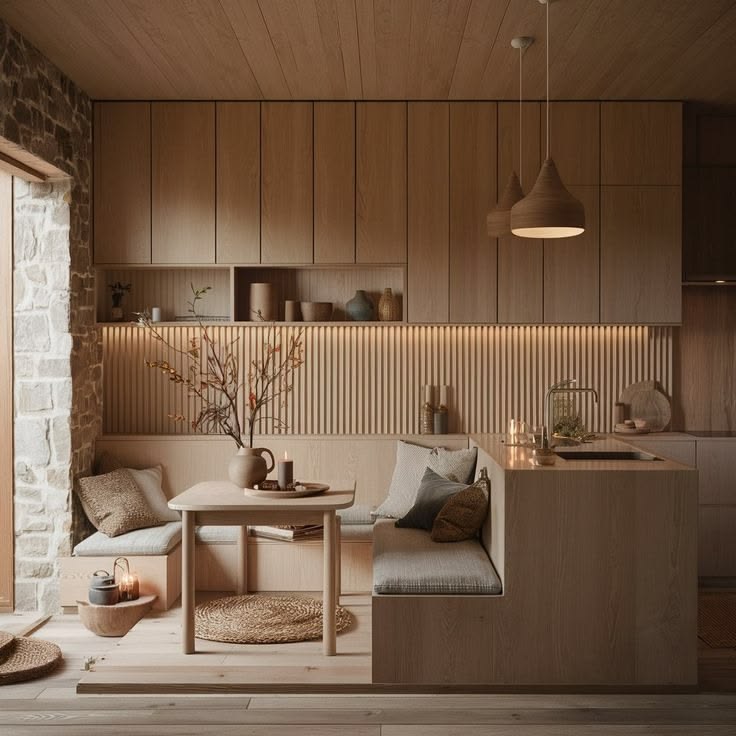
One of the most interesting developments is the rise of the ‘not-a-kitchen’ kitchen. The idea is simple: rather than making the kitchen look like a traditional bank of cabinetry and appliances, the design borrows elements from living and dining spaces.
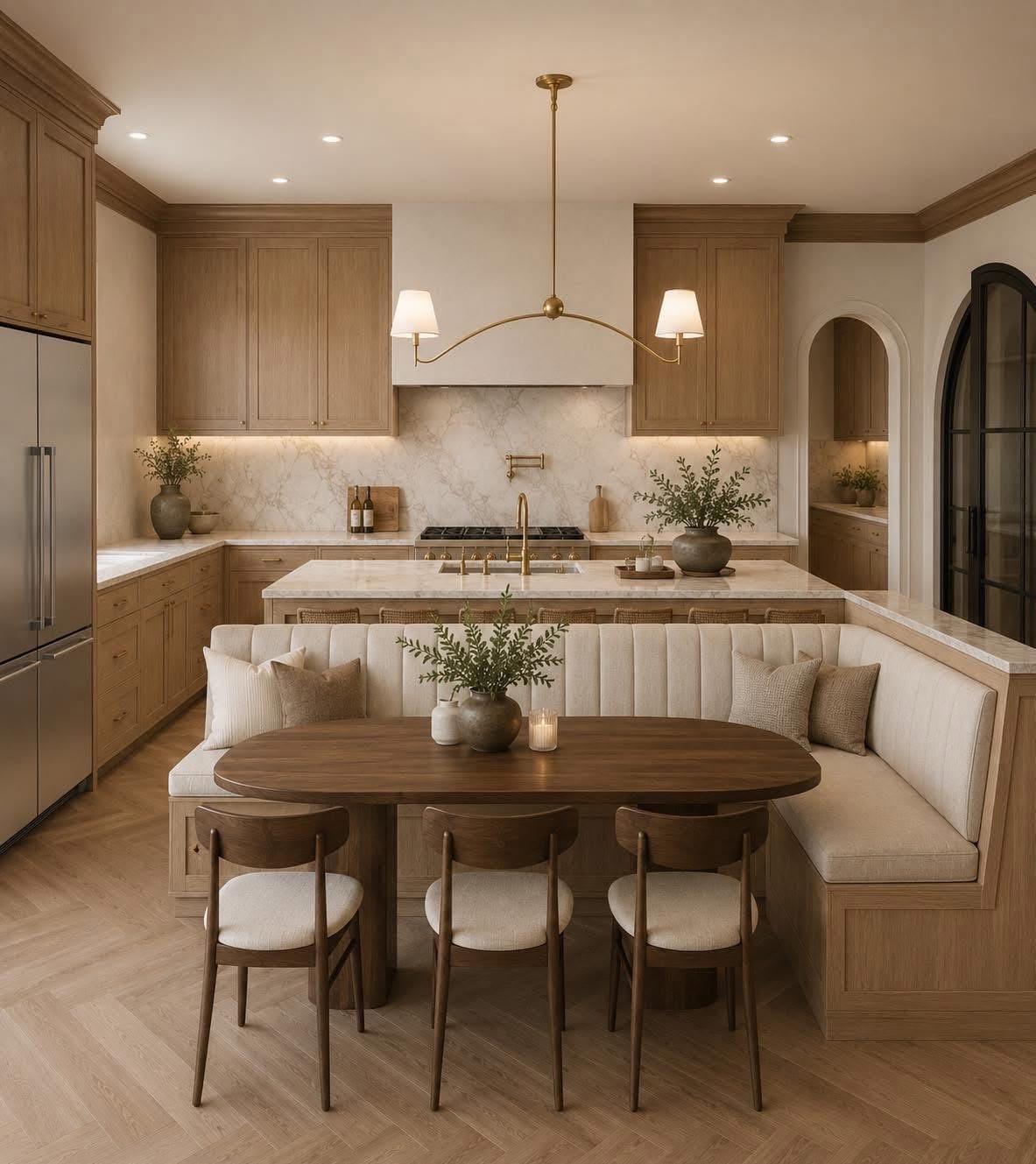
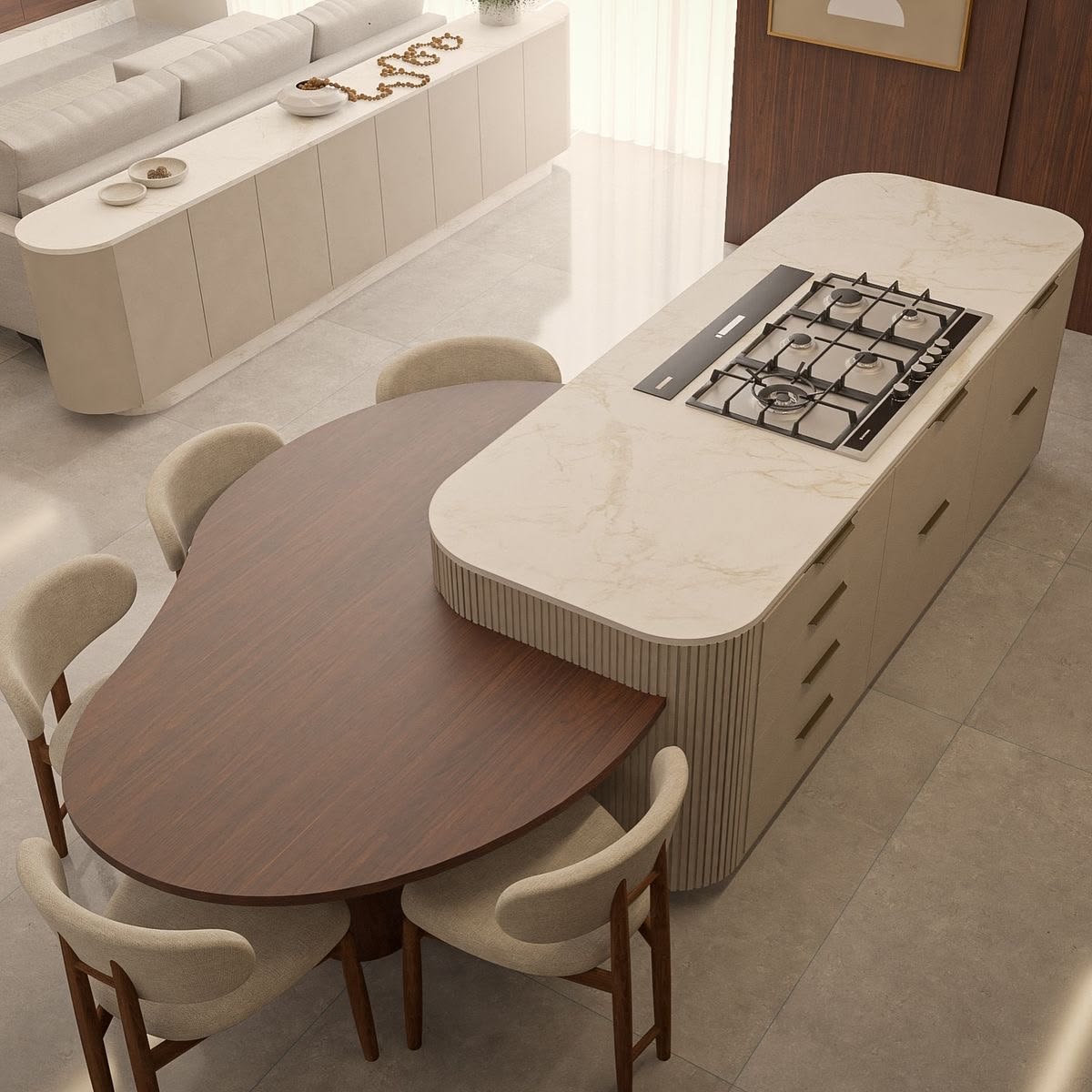
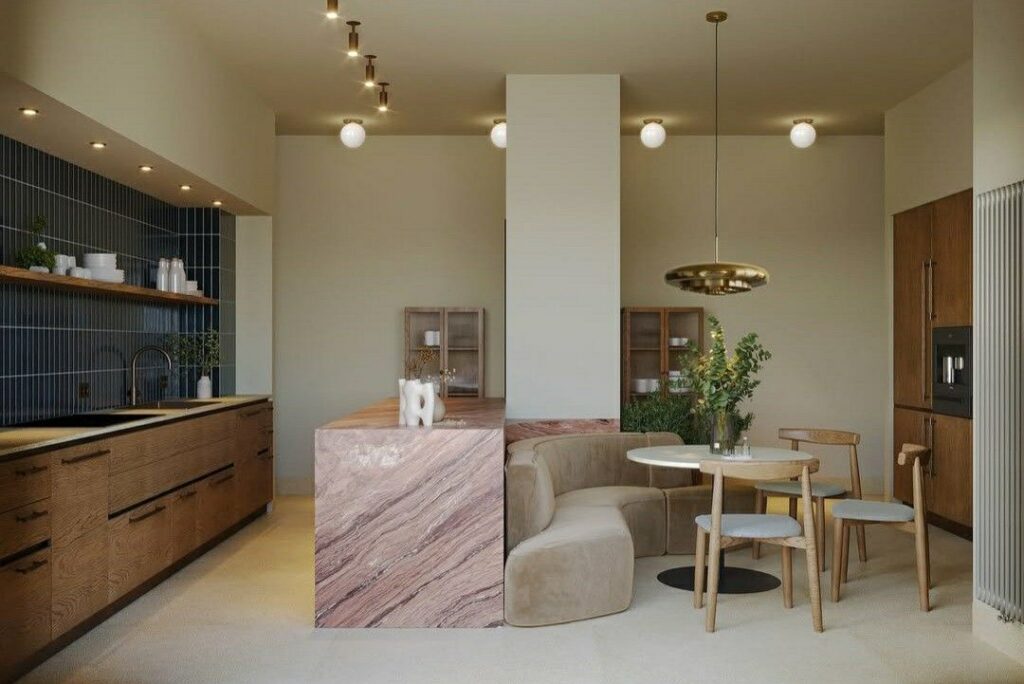
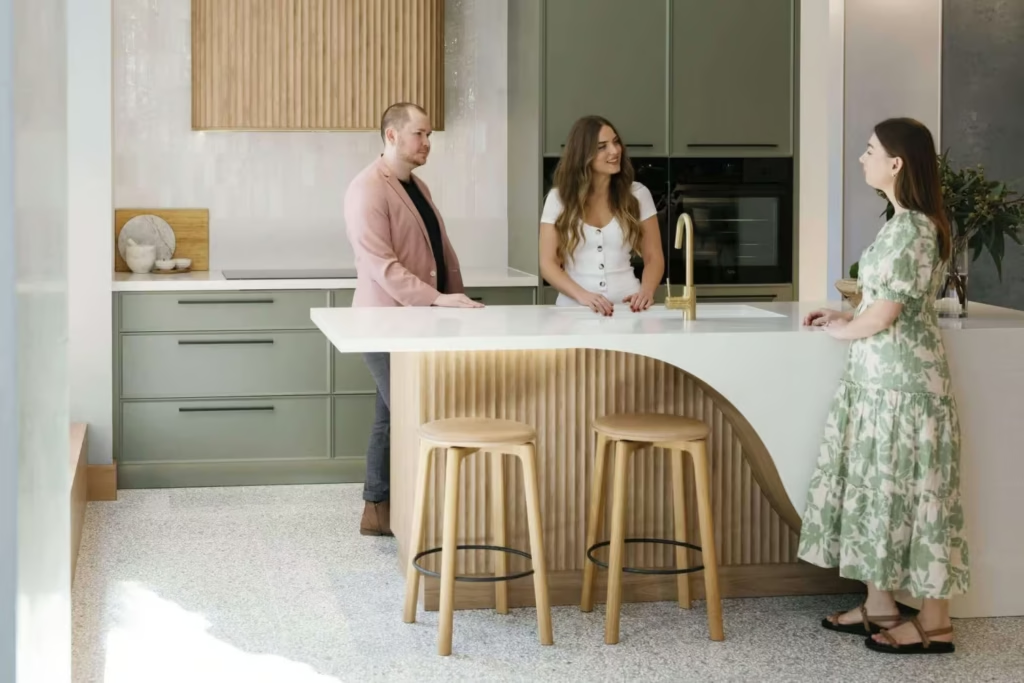
Furniture-style cabinetry, freestanding pieces, decorative lighting, artwork, rugs and carefully selected display items can soften the transition between kitchen and living areas. Even islands are becoming more furniture-like, with curved forms and detailed joinery replacing the purely functional rectangular block.
This approach works particularly well in open-plan homes where the kitchen is constantly on display. The aim isn’t to hide the fact that it is a kitchen, but to make it feel like a natural part of the home rather than a separate working zone.
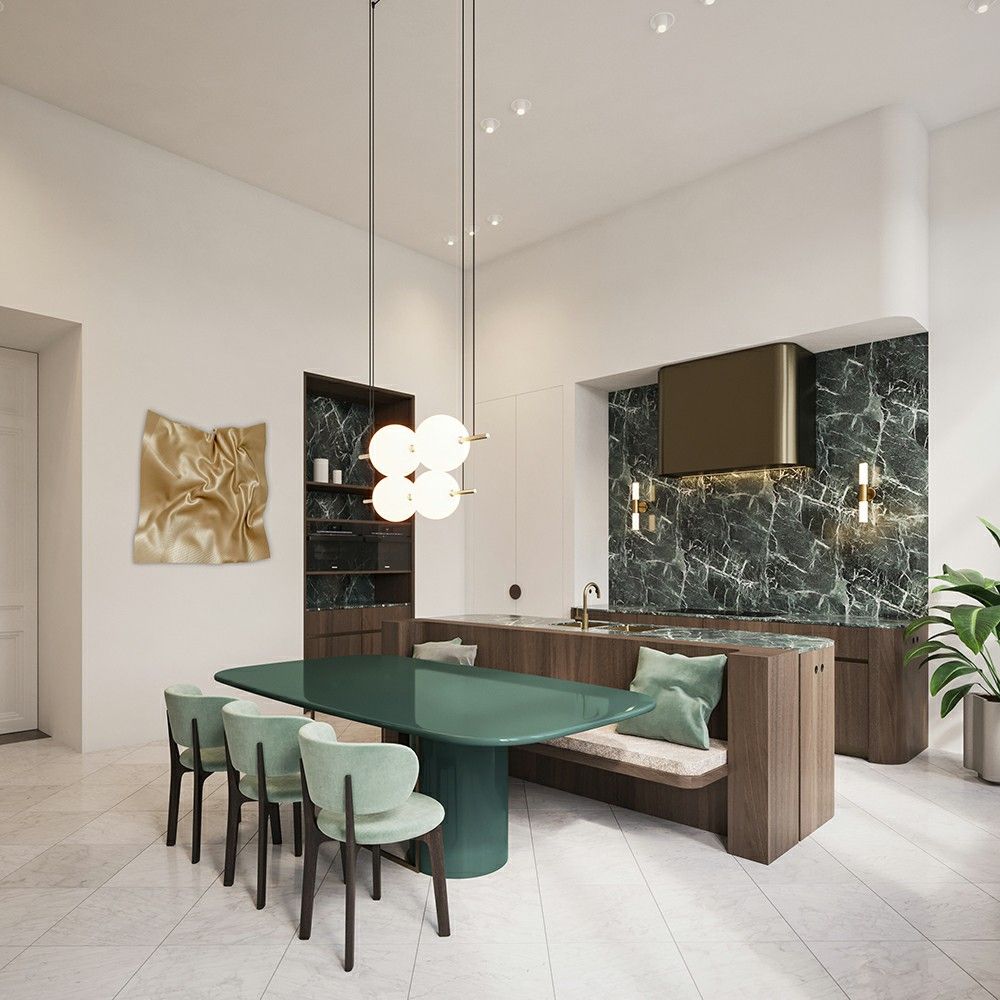
Curves Bring a Softer Feel
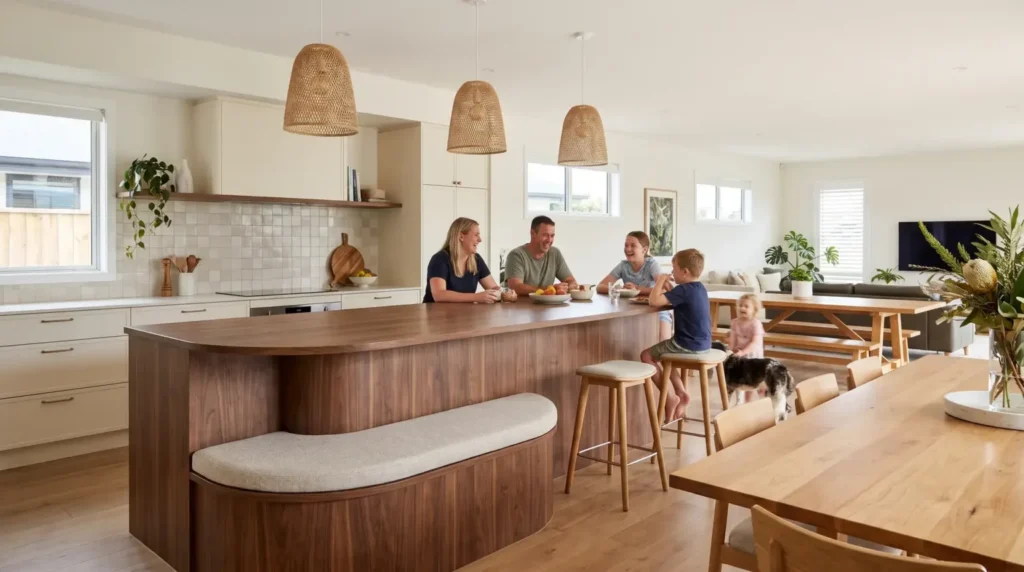
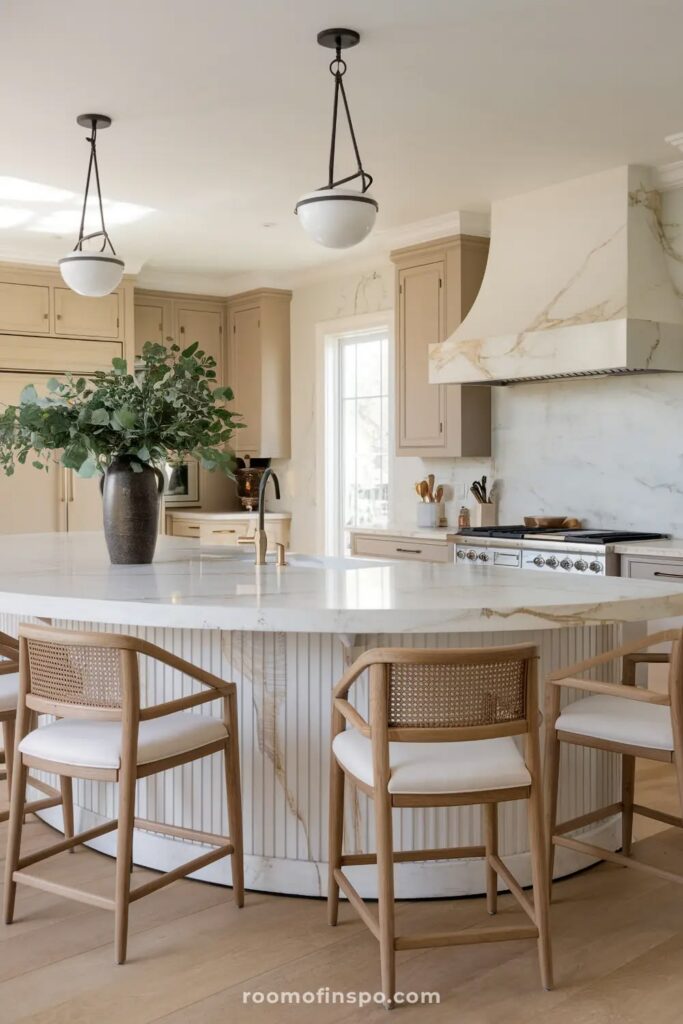
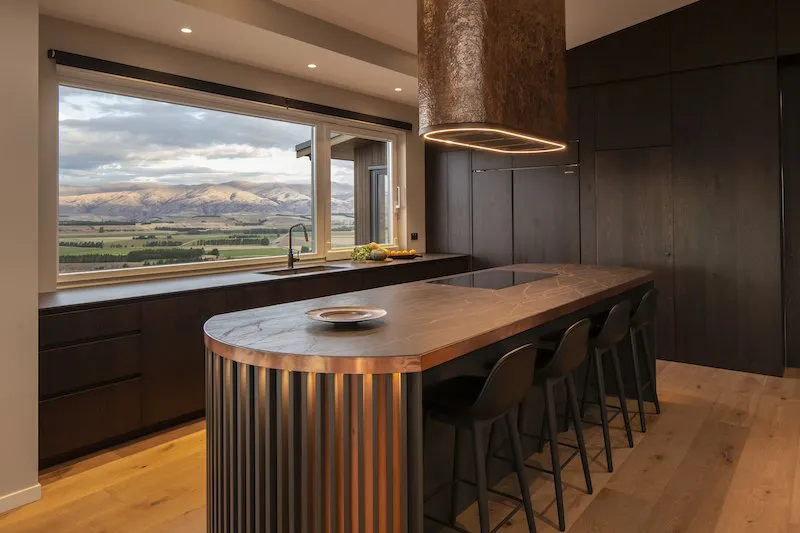
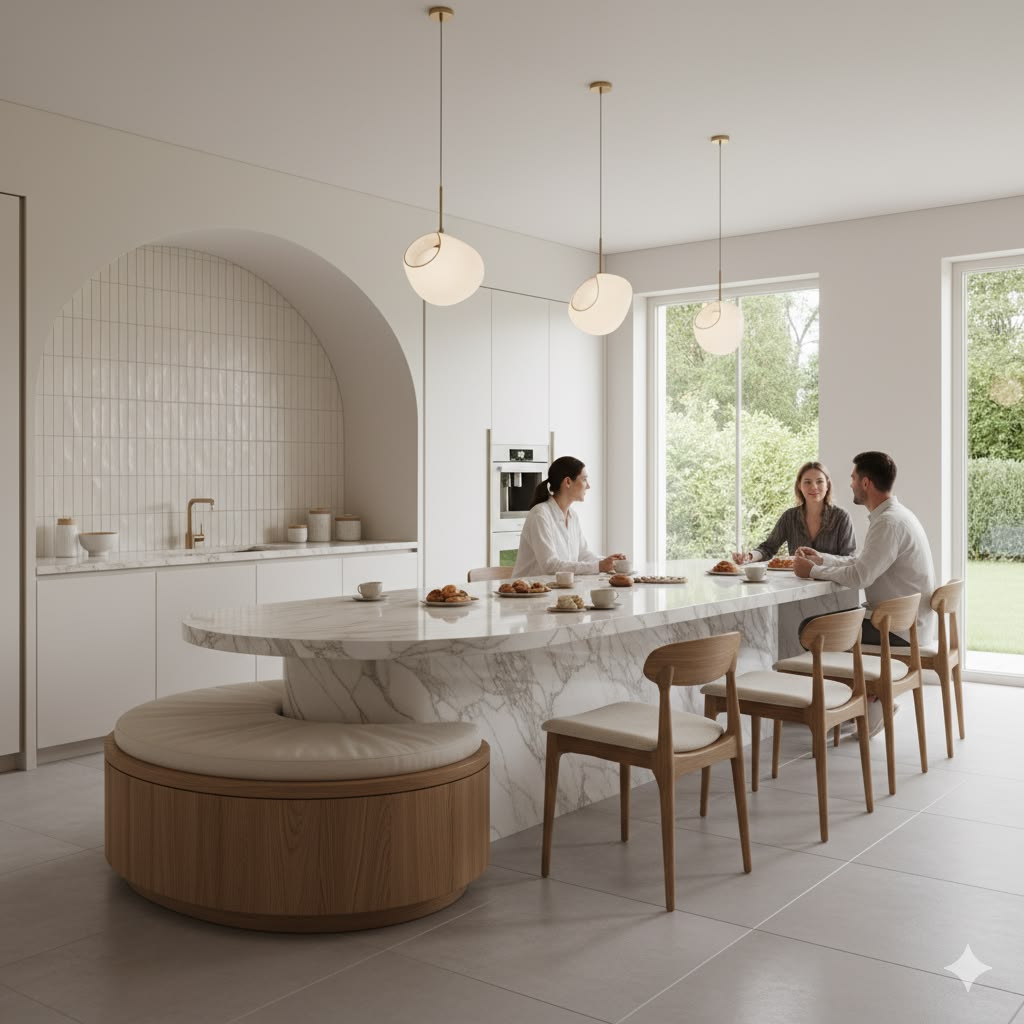
Straight lines have dominated kitchen design for years, but curves are becoming increasingly important in 2026. Rounded island ends, curved cabinetry, softly shaped breakfast bars and furniture-inspired forms introduce movement and make large open-plan spaces feel less rigid.
Curves can also be surprisingly practical. A rounded island can improve circulation around the kitchen and create a more sociable space for family and guests.
You don’t need to redesign an entire kitchen around curves. A gently rounded island, curved pendant lights or an arched feature can introduce the look without overwhelming the room.
Texture Is the New Decoration
With simpler colour palettes becoming popular, texture is doing more of the visual work. Fluted timber, ribbed surfaces, handmade tiles, natural stone and tactile cabinetry details add interest without relying on strong patterns or excessive decoration.
Timber is particularly effective. Rather than using it everywhere, consider introducing it as a feature on an island, pantry doors or a section of cabinetry. The natural variation of timber gives even a minimalist kitchen a sense of warmth.
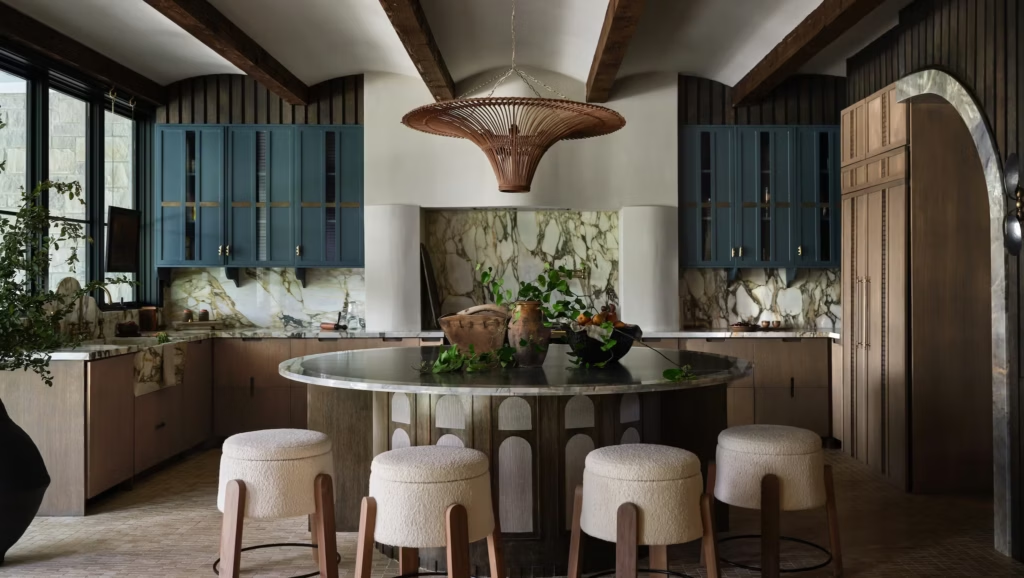
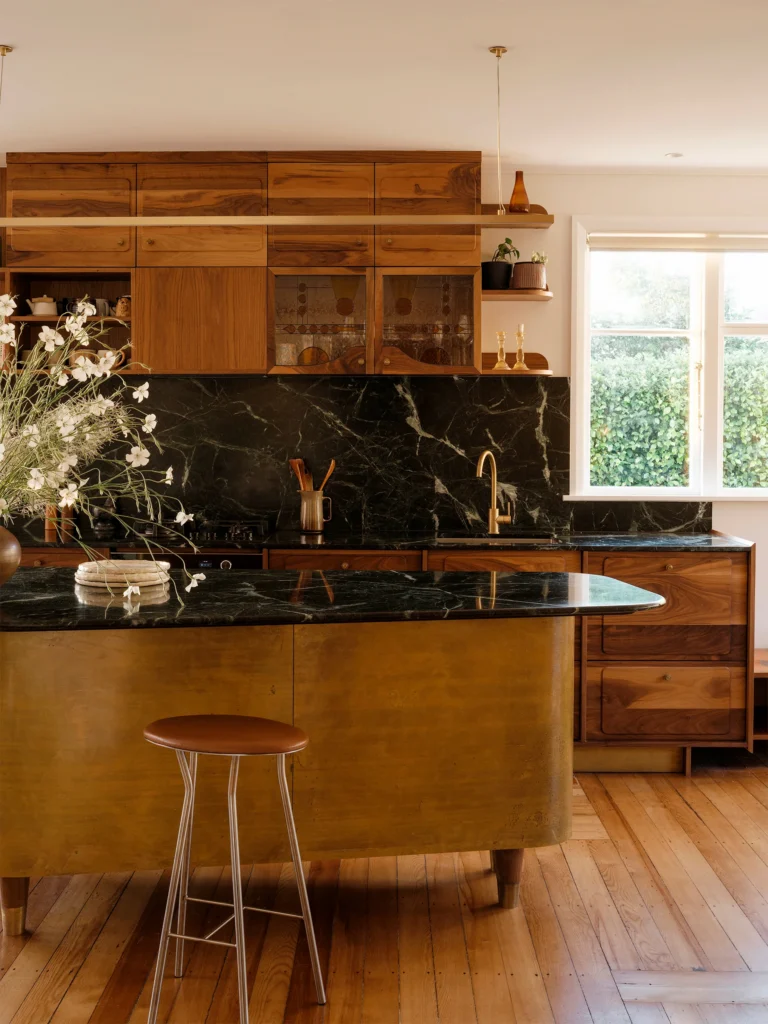
The same principle applies to stone. Dramatic veining can become the artwork of the kitchen, while quieter stone creates a sophisticated backdrop. In 2026, Kitchen Trends show natural imperfections and variations are part of the appeal.
The Splashback Becomes a Feature
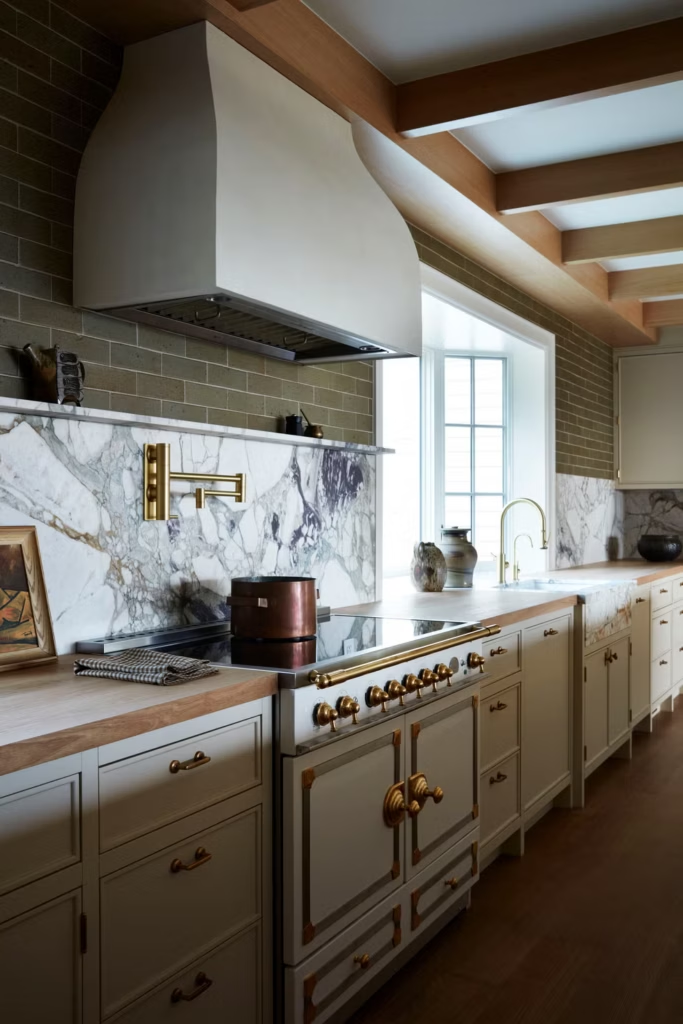
The humble splashback is having something of a makeover. Instead of treating it as a small functional strip behind the cooktop, designers are increasingly extending stone or other materials vertically across larger areas of the kitchen.
A full-height stone splashback creates a seamless, architectural appearance, particularly when the same material continues from the benchtop up the wall. For those wanting more personality, patterned and handmade tiles are also returning, with softer ways of introducing pattern making them easier to live with.
For a high-end look, consider allowing one beautiful material to make the statement rather than combining too many competing surfaces.
Two-Tone Kitchens Add Depth
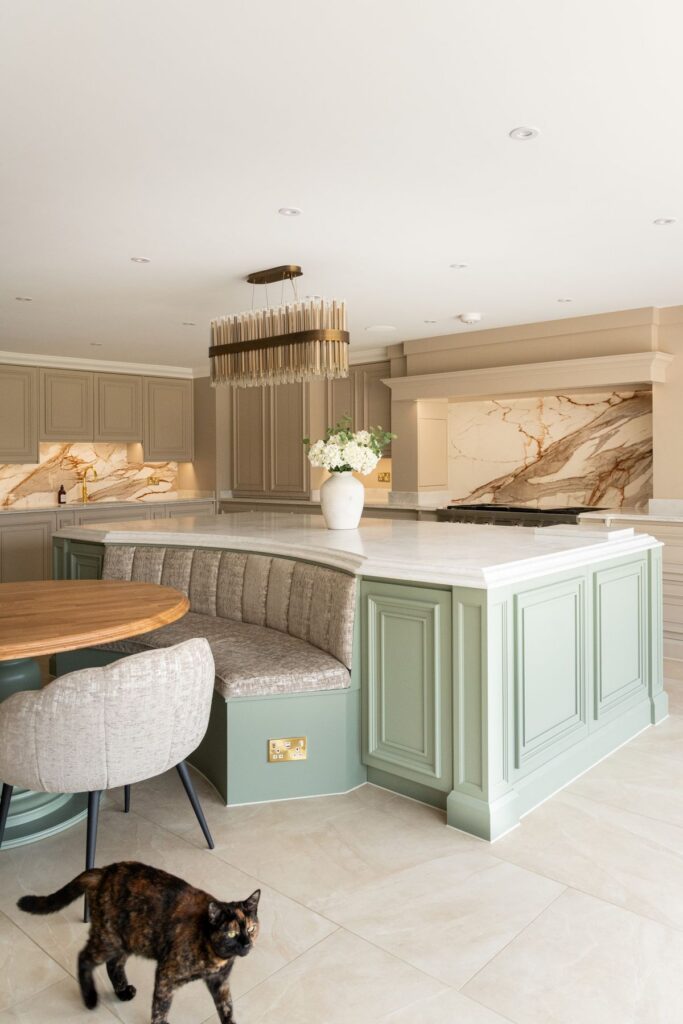
The two-tone kitchen continues to be popular in Kitchen Trends in 2026, because it offers an easy way to introduce contrast without making the room feel visually busy. An island in timber or a deeper colour can be paired with lighter perimeter cabinetry, while contrasting upper and lower cabinetry can create a more layered appearance. Earthy greens, muted blues, warm browns and terracotta-inspired tones are particularly suited to this approach. The key is restraint. Two complementary finishes generally create more sophistication than trying to introduce a different colour or material at every turn.
Concealed Storage and the Return of the Scullery
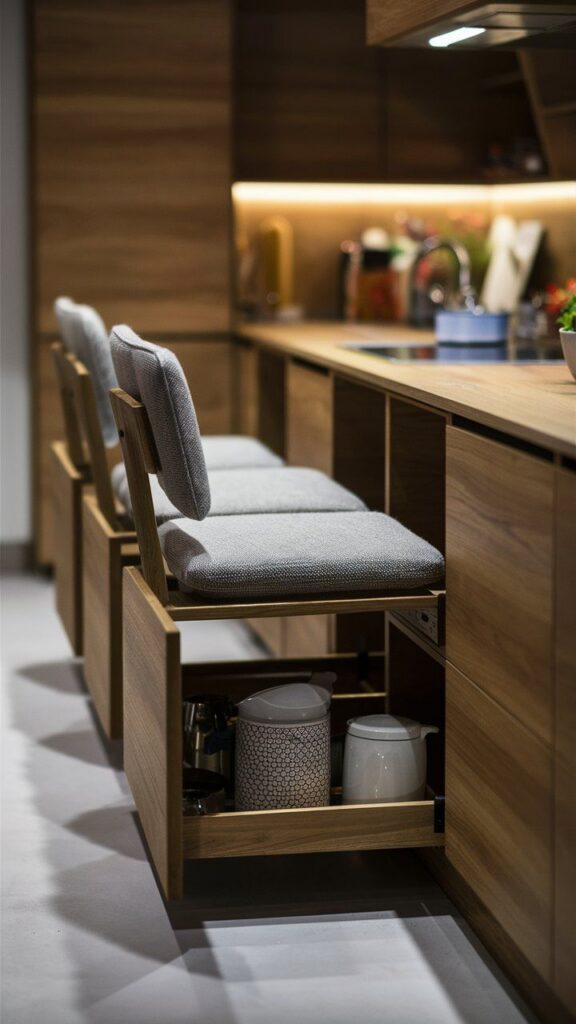
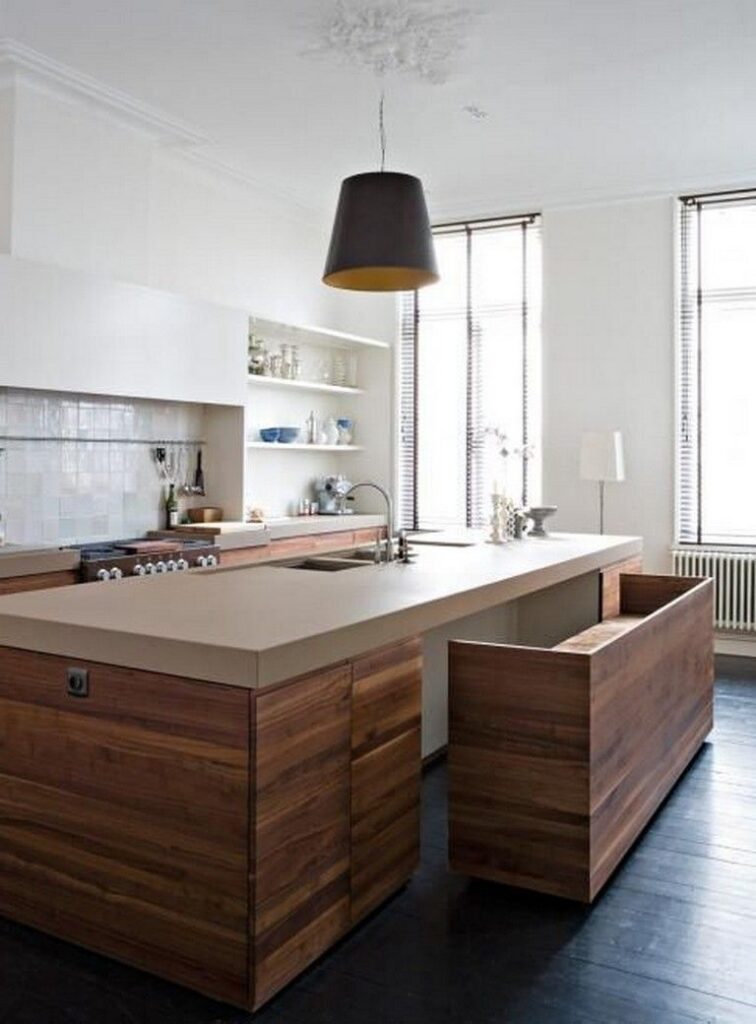
Beautiful kitchens still have to work hard, and one of the strongest practical Kitchen Trends in 2026 is the desire to keep everyday clutter out of sight. Integrated appliances, hidden storage, appliance garages and dedicated preparation zones are helping create kitchens that look calm even when they are being heavily used. The scullery is particularly relevant to larger New Zealand homes. Positioned behind or beside the main kitchen, it can house appliances, food preparation, additional storage and those everyday items that don’t necessarily deserve a place on display. This creates an interesting balance: the main kitchen can become more beautiful and social, while the practical work of the kitchen continues behind the scenes.
Integrated Appliances Keep the Look Seamless
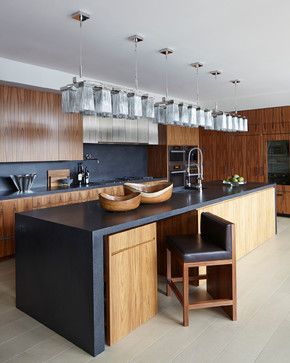
Appliances are becoming increasingly discreet. Integrated refrigerators, dishwashers and other appliances can be concealed behind cabinetry, allowing the joinery and architectural elements of the kitchen to take centre stage. Smart technology is also continuing to enter the kitchen, from connected appliances to increasingly sophisticated ovens and extraction systems. But technology is most successful when it improves the way a kitchen functions without dominating its appearance. The 2026 Kitchen Trends approach is therefore less about filling a kitchen with gadgets and more about choosing technology that genuinely makes everyday life easier.
Personality Is Back
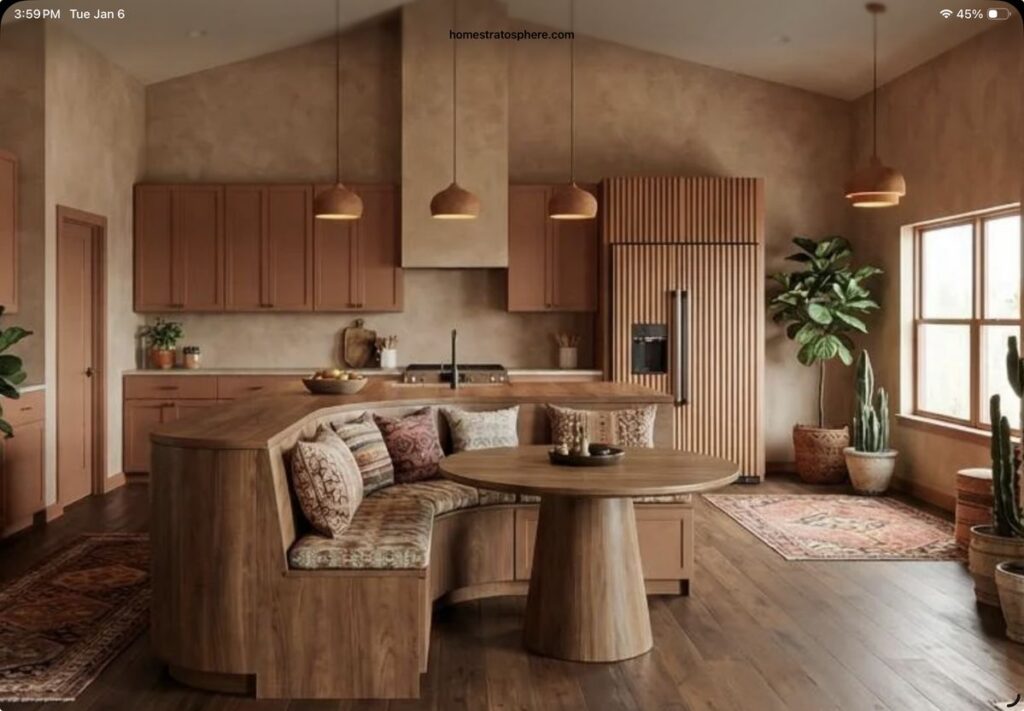
Perhaps the most welcome kitchen trend of 2026 is that kitchens are becoming more personal. After years of highly coordinated interiors and minimalist spaces, homeowners are increasingly bringing artwork, vintage pieces, decorative lighting, collected objects and individual details into their kitchens. This doesn’t mean abandoning a contemporary aesthetic. A modern kitchen can still have clean cabinetry and sophisticated stone while incorporating an antique table, statement pendant, artwork or treasured piece of furniture. The result is a kitchen that feels like part of someone’s home rather than a showroom.
Designing a Kitchen That Will Last
While it is tempting to embrace every new kitchen trend, the best 2026 kitchens are not necessarily the most trend-heavy. A kitchen is a significant investment, so the foundation should always be based on good proportions, quality materials, practical storage and a layout that suits the way you live. Use trends selectively. A fashionable colour can be introduced through an island or cabinetry, while handles, lighting and accessories are relatively easy to change later. Spend more thought on the elements that are difficult and expensive to replace, such as the layout, cabinetry, benchtops and flooring. The direction of kitchen design in 2026 is ultimately less about creating the perfect ‘on-trend’ kitchen and more about creating a space with warmth, character and longevity. The most beautiful kitchens are beginning to look less like they were designed for a trend report and more like they belong to the people who live in them. For New Zealand homes, that could mean timber warmed by natural light, stone that reflects the landscape, colours inspired by nature and a kitchen designed around connection rather than simply cooking. In other words, a kitchen that looks beautiful today, but feels even better to live with tomorrow.
New Zealand Designers to Watch
New Zealand’s kitchen design scene continues to produce some impressive talent, with local designers creating spaces that are both highly considered and reflective of the way we live. Among the names worth exploring are Shane George Design, winner of the 2026 TIDA New Zealand Designer Kitchen of the Year, and Atelier Jones Design, whose Raimana Jones took out the 2026 TIDA New Zealand Architectural Designer Kitchen of the Year. Auckland’s Kitchens By Design, with award-winning designer Alina Cuchiliuc, and Du Bois Design, led by 2025 NKBA Designer of the Year Natalie Du Bois, are also worth discovering for their sophisticated, bespoke approach. German Kitchens Limited Wellington offers a strong European influence, while Fyfe Kitchens and Hamilton-based Designmarked demonstrate the breadth of award-winning kitchen design being produced across the country. Together, these designers showcase a distinctly contemporary New Zealand approach, where beautiful materials, clever functionality and personalised design come together to create kitchens designed for real life.
Where to Find Kitchen Inspiration in New Zealand
Kitchen Trends in 2026 – If you’re planning a new kitchen or renovation, visiting a showroom is one of the best ways to see materials, cabinetry, benchtops, hardware and appliances in person. Across New Zealand there are plenty of design studios and showrooms worth adding to your inspiration list, from specialist independent designers to established kitchen brands.
Auckland – Auckland has one of New Zealand’s strongest selections of kitchen showrooms, making it an excellent place to explore the latest cabinetry, surfaces, appliances and design ideas. Kitchens By Design is worth a visit for its high-end, design-led approach, while Häcker Kitchens offers German-engineered cabinetry with a contemporary European aesthetic. Other options include Kitchen Studio showrooms across Auckland and the wider Auckland region, along with specialist design destinations such as Resene and Blum for exploring colour, finishes, hardware and storage solutions.
Wellington – Wellington homeowners can explore Kitchen Studio’s Wellington Central City and Petone studios, alongside independent kitchen designers and specialist interior showrooms throughout the region. The Wellington area is particularly worth exploring if you’re looking for a more bespoke or architectural approach to kitchen design.
Christchurch – Christchurch has a strong kitchen design and manufacturing scene, with Kitchen Studio North and South and Trends Kitchens’ Christchurch headquarters and showroom. Trends’ Christchurch location includes two showroom spaces with kitchen and laundry displays, making it a worthwhile stop for anyone looking at a major renovation or new build.
Hamilton – Hamilton has several options for kitchen inspiration, including Kitchen Studio Hamilton, where visitors can explore kitchen design and discuss layouts, materials and functionality with designers.
Tauranga – Kitchen Studio Tauranga provides a dedicated kitchen design studio for Bay of Plenty homeowners, while the wider Tauranga area also has independent kitchen designers and interior showrooms worth exploring.
Dunedin – Kitchen Studio Dunedin is a useful starting point for homeowners in the lower South Island, with a dedicated showroom where visitors can explore kitchen design, cabinetry and materials. There are also a number of independent kitchen designers and joiners in the city.
Nelson & Marlborough – For homeowners in the top of the South Island, Kitchen Studio has a Nelson studio, while Trends Kitchens has showrooms in both Nelson and Blenheim. Both regions offer opportunities to explore kitchen design and materials closer to home.
Other regional centres – Kitchen Studio also has design studios in Hastings/Napier, New Plymouth, Palmerston North, Feilding and other centres, while Trends Kitchens has a presence in Cromwell. This makes it possible for homeowners outside the main cities to access professional kitchen design and showroom inspiration without necessarily travelling to Auckland or Christchurch.